
Product
Specifications
The Synocular eye tracker: a remote, binocular eye tracker for research, and as a component for makers of communication and access products. Dark-pupil pupil–corneal-reflection tracking from one near-infrared camera and two 850 nm illuminator groups, six LEDs in all, in a bar that sits below the display. These are the current design specifications for the pre-production tracker, planned for spring 2027. Final specifications will be confirmed before supply.
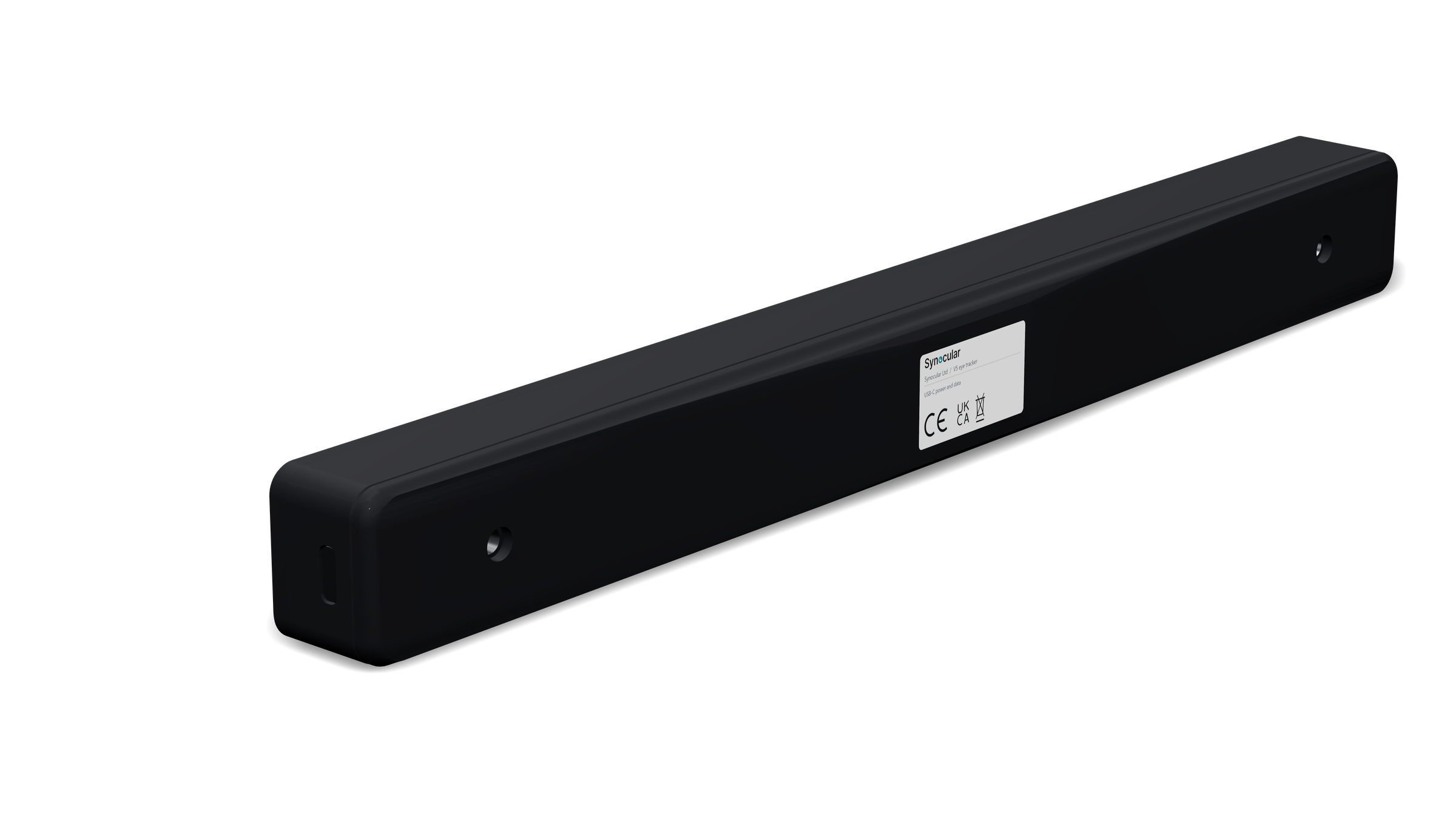
Synocular V5 production design.
An overview, with setup illustrations: Product.
Measurement principle
- Tracking. Dark-pupil pupil–corneal-reflection (PCCR), both eyes. Gaze is reported per eye and combined; tracking continues on one eye when the other is lost.
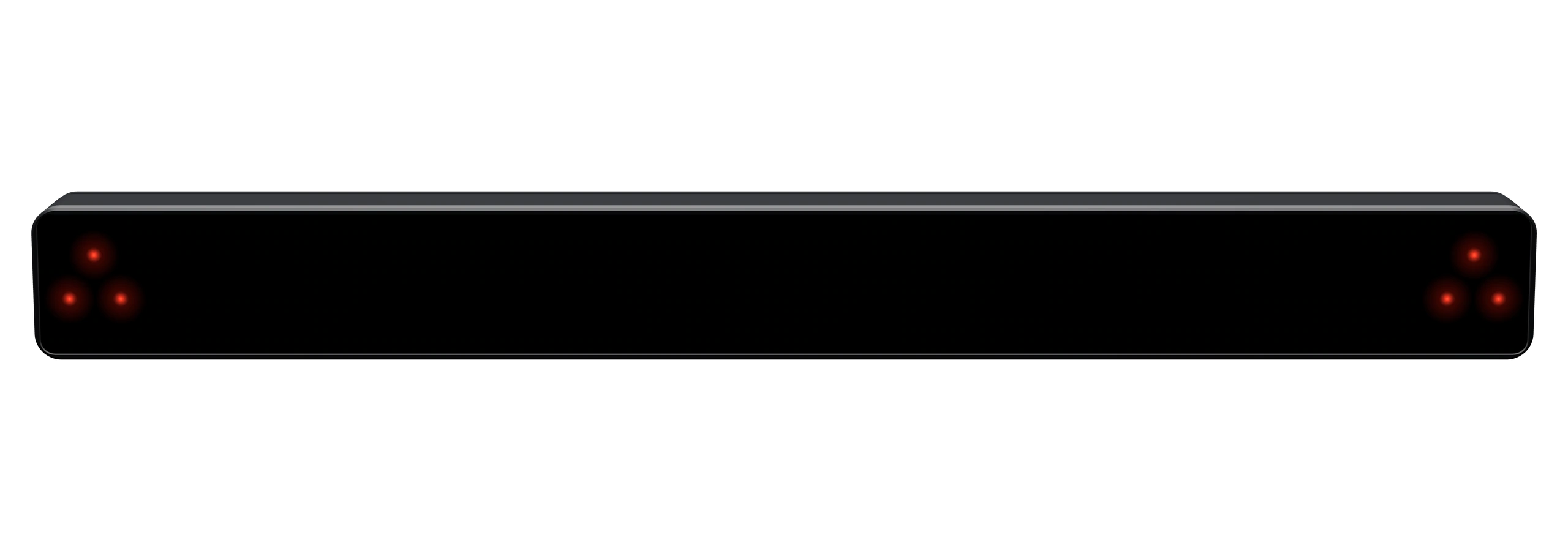
- Illumination. Two 850 nm sources of three LEDs each, one either side of the camera, give two corneal reflections per eye.
- Calibration. Nine-point (3 × 3), or sixteen-point (4 × 4) for studies that need more.
- Validation. A separate set of twelve targets, none at calibration positions. Accuracy is reported as the mean angular offset, precision as RMS deviation about the mean. The report is saved with the recording.
- Head movement. Free, with no headrest or chin rest. Viewing distance and 3D eye positions are estimated for every sample and recorded with the gaze.
More detail: How it works.
Specifications
Design and default values.
Tracking
| Method | Dark-pupil PCCR, binocular (per-eye and combined gaze); one-eye fallback |
| Sample rate | 60 Hz |
| Operating distance | 55–75 cm from the tracker. |
| Accuracy and precision | Participant testing is under way; how they are measured: Performance |
| Calibration | Nine or sixteen points; separate validation set of twelve points |
| Event detection | Online I-VT fixations, saccades and blinks; I-VT and I-DT offline in Synocular Analysis |
Data
| Live, every sample | Combined and per-eye gaze in screen pixels with timestamp (µs, monotonic clock) and sample number, lost samples marked; viewing distance; pupil diameter (camera pixels); glint positions; fixation or saccade state; eye-camera video |
| Recorded | Session bundle (.zip): the live data, plus 3D eye positions, fixations, saccades and blinks, eye-camera frames, and an optional screen capture (about 10 frames/s) |
| Interfaces | C++ and .NET libraries; JSON-RPC 2.0 over local TCP; Python client example |
| Export | BIDS, EyeLink ASC and Tobii Pro Lab TSV text formats |
Software
| Synocular | Windows application: setup guide, calibration, validation, live gaze view, session recording |
| Synocular Analysis | Included. Post-hoc: I-VT / I-DT, static and keyframed AOIs, heat maps, data-quality metrics, CSV / XLSX / HTML reports, MP4 export |
Illumination
| Wavelength | 850 nm; two sources, one at each end of the bar |
| Eye safety | Calculated to be within the IEC 62471 exempt group at the 200 mm design minimum (corneal irradiance about 44 W/m², limit 100 W/m²); independent assessment planned before supply |
Hardware
| Gaze processing | On-device gaze estimation. The Windows software handles setup, recording and analysis. |
| Optics | 10 mm focal length. |
| Enclosure | 278 × 28.5 × 26 mm, excluding cable and mount. |
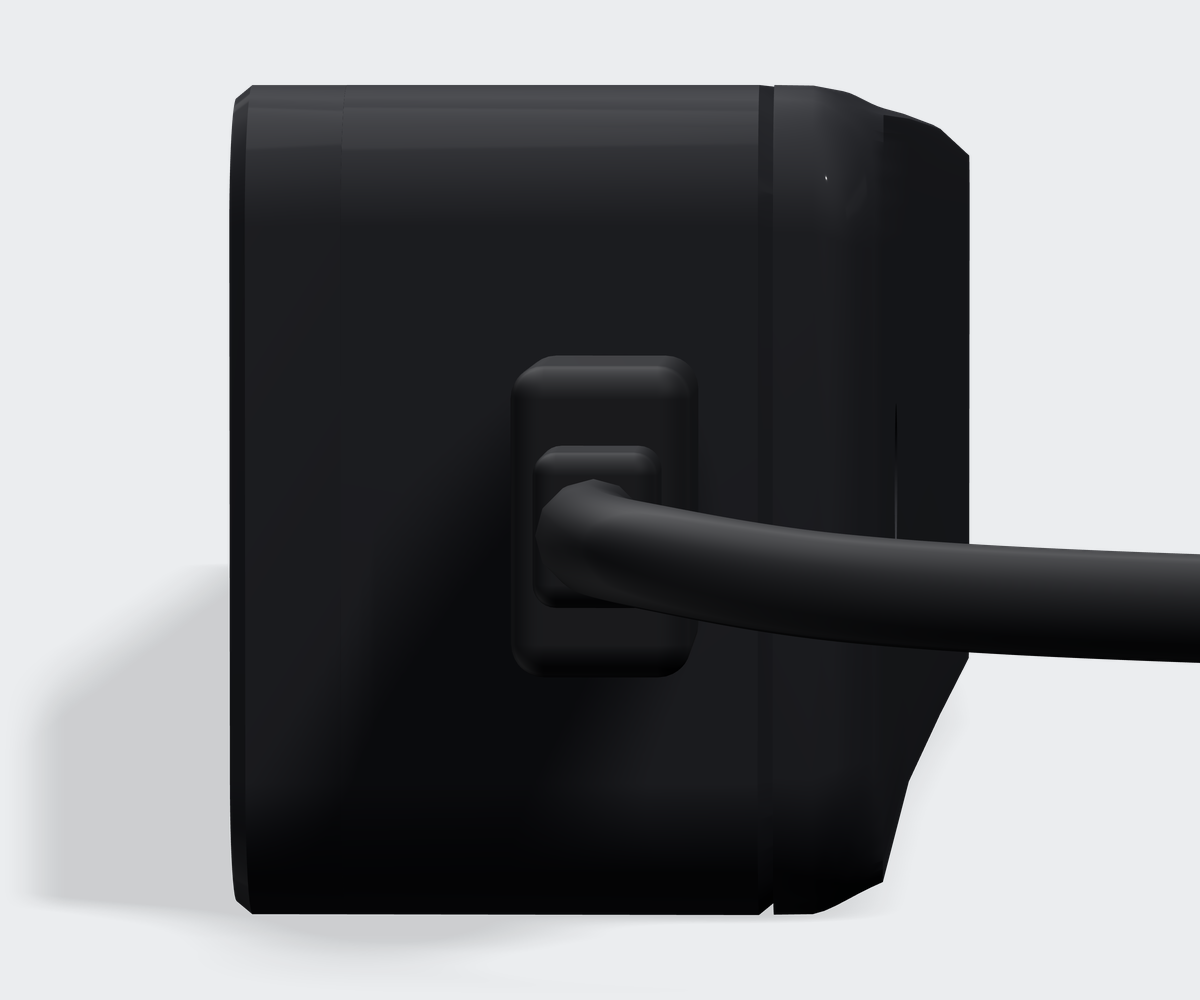
| Connections | Side-exit USB-C to the computer. |
| Power | Power and data through a single USB-C connection. |
| Mounting | 1/4-20 tripod thread on the underside. The adjustable VESA bracket bolts into two recessed rear M5 nuts and attaches to the monitor’s 100 × 100 mm VESA pattern. Bracket tilt is 15–40°. |
| Operating temperature | 10–35 °C |
To use it you need
- A 64-bit Windows 10 (version 1803 or later) or Windows 11 PC and a USB 3.0 port, running the Synocular software.
- Supplied with the tracker: USB-C cabling and a desk tripod with a tilt head. The VESA mount fixes the bar below a display instead (see Mounting).
Intended use
Supplied on a business-to-business basis, for research and development use. Intended use: Intended use & safety.